


Wednesday, 1 July 2026
Parliament House, Canberra ACT
By Invitation Only
The Policy Summit on the Future of the Nineveh Plains will bring together Australian academics, policymakers, civil society leaders, human rights advocates, community representatives, and non-government organisations for a timely discussion on the future of one of the Middle East’s most significant regions.
The Summit will explore pathways towards empowering the people of the Nineveh Plains, with a focus on the Assyrian people and other communities in the region, through greater self-governance, economic development, and sustainable community-led solutions.
Discussions will focus on self-administration, strengthening local institutions, creating opportunities for young people, protecting human rights, enhancing social cohesion, and fostering long-term stability and prosperity for the region.
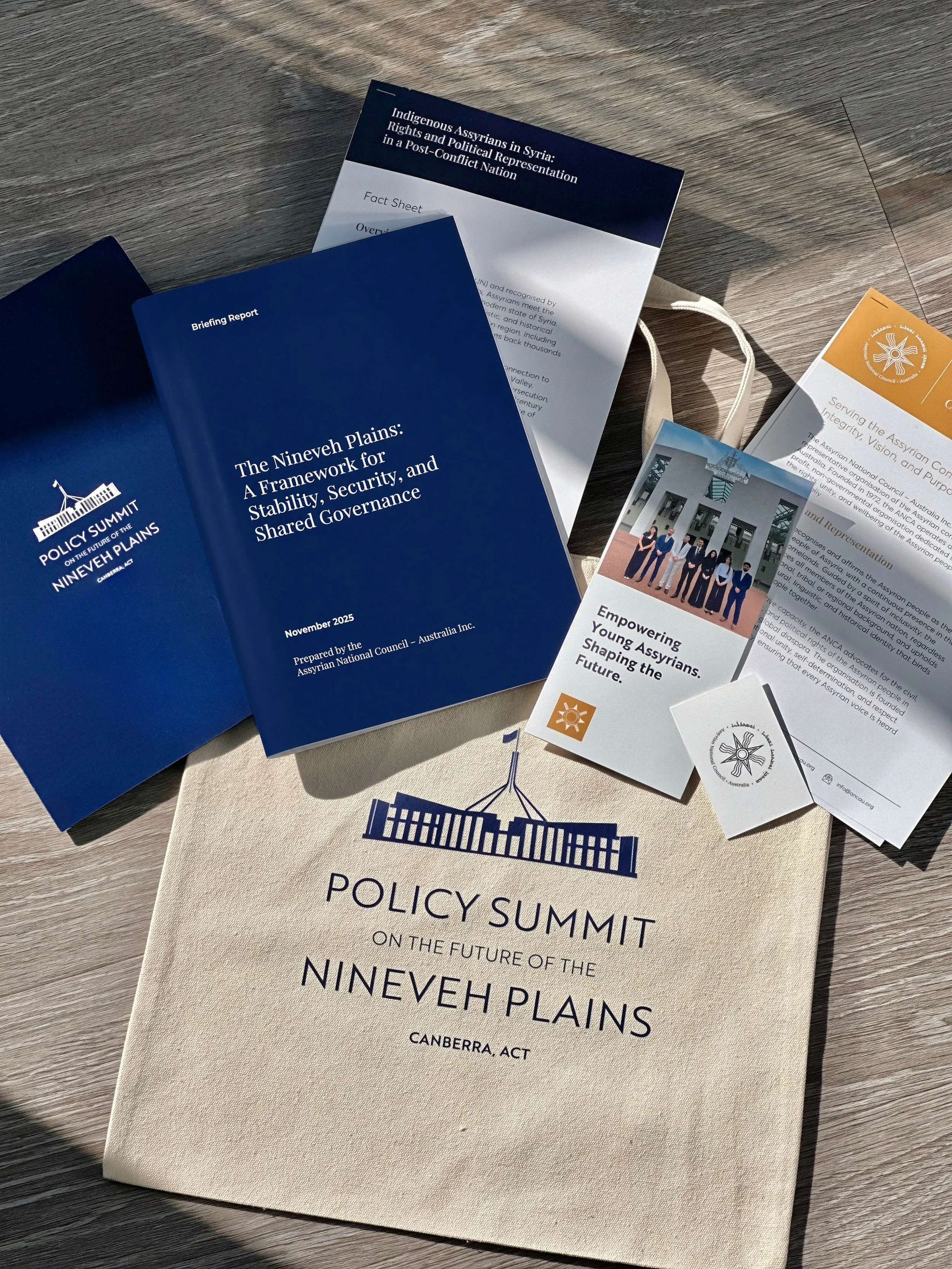
As Australia's capital city and the seat of the nation's Parliament, Canberra provides a unique setting for meaningful dialogue between policymakers, academics, civil society organisations, human rights advocates, and community representatives.
Why in Canberra?
Meet Our Keynote Speaker
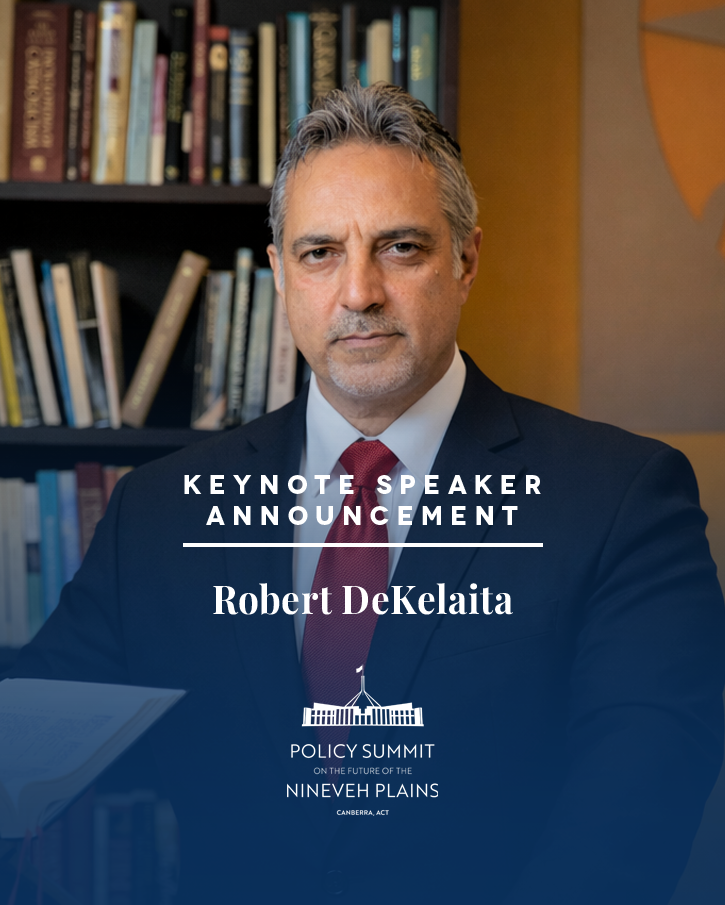
We are honoured to announce Mr. Robert DeKelaita as the keynote speaker for the Policy Summit on the Future of the Nineveh Plains.
Born in Kirkuk, Iraq, Mr. DeKelaita is the Principal of DeKelaita Consulting LTD and an attorney with DeKelaita Law LLC. He practised law in the Chicago area for more than three decades, building a distinguished career in legal advocacy, scholarship, and community leadership.
Mr. DeKelaita holds a Bachelor of Arts in Political Science and Philosophy from the University of Illinois at Chicago, a Master of Arts in International Relations from the University of Chicago, and a Juris Doctor from Loyola University Chicago School of Law.
A dedicated advocate for Assyrian history, cultural identity, and heritage preservation, Mr. DeKelaita was among the founders of the Ashurbanipal Library and served as publisher and editor of Nabu Quarterly, a publication devoted to Assyrian community affairs, analysis, and scholarship.
Throughout his career, he has authored numerous articles on Assyrian history, nationalism, identity, and political issues, while also teaching courses on ancient, classical, and modern Assyrian history. His work has helped educate and inspire new generations and has made a lasting contribution to the preservation and advancement of Assyrian cultural and intellectual heritage.
Meet Our Panellists
-

Dr. Hugh McDermott MP
-

Dr. George Marano
-

Ms. June Ishtar Jako
-

Mr. Dennis Suro
-

Ms. Robina Lajin
For generations, the Nineveh Plains has been regarded by Assyrians as the heartland of their ancestral homeland. Situated in northern Iraq and home to some of the world's oldest continuously inhabited towns and villages, the region has served as a centre of Assyrian cultural, linguistic, and religious life for centuries.
Today, the Nineveh Plains remains deeply significant to Assyrians both within the region and throughout the global diaspora. It is home to historic communities, churches, monasteries, and cultural traditions that continue to shape Assyrian identity and heritage.
The Nineveh Plains
Policy Priorities
1. Establish a Nineveh Plains Governorate
Create a locally administered governorate within Iraq's constitutional framework, enabling effective governance, accountability, and representation for the communities of the Nineveh Plains.
2. Strengthen Security and Stability
Support a security framework that protects all communities, facilitates the return of displaced families, and promotes long-term peace and stability across the region.
3. Protect Indigenous Assyrian Rights
Recognise and safeguard the cultural, linguistic, religious, and historical heritage of the Indigenous Assyrian people, consistent with international human rights principles.
4. Drive Economic Development
Invest in infrastructure, education, healthcare, agriculture, tourism, and local enterprise to create jobs, attract investment, and support sustainable growth.
5. Promote Inclusive Governance
Ensure meaningful political participation for all communities through transparent, representative, and locally accountable governance structures.