
Kashkawa and the Nahla Valley: Understanding the History Behind Today's Events
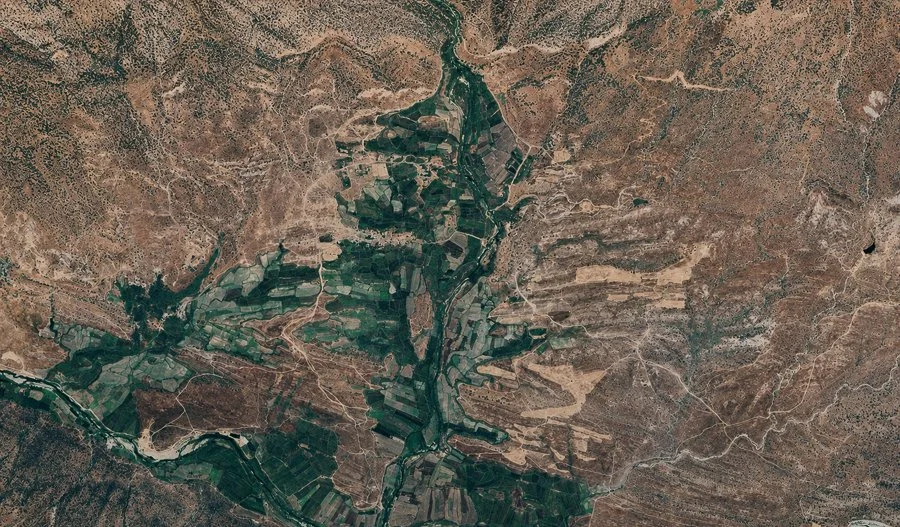
For more than a century, the Assyrian village of Kashkawa, situated in the Nahla Valley of northern Iraq, has endured repeated cycles of displacement, destruction, return, and, more recently, ongoing disputes over its agricultural lands. Recent reports from residents alleging renewed cultivation of disputed lands despite court rulings in their favour have once again drawn attention to Kashkawa.
While these developments have prompted renewed concern among Assyrians worldwide, they are not isolated incidents. Rather, they form part of a much longer historical record documented by historians, government reports, and legal proceedings spanning over 100 years.
A Historic Assyrian Village
The history of Kashkawa extends well beyond the modern political landscape of northern Iraq. The village was established decades before the emergence of the present-day Kurdistan Regional of Iraq (KRI), reflecting the longstanding Indigenous Assyrian presence in the Nahla Valley long before the region came under its current administrative framework.
According to historian Dr. Sargon Donabed in Reforging a Forgotten History, Kashkawa was established in 1920 by Assyrian families from Lower Tiyari following the upheavals of the First World War. Over the following decades, the village grew steadily, with census records documenting its Assyrian population throughout the 1930s and 1950s.
Historical research by Mr. Majed Eshoo likewise identifies Kashkawa as one of the historic Assyrian villages of the Nahla Valley, where families relied primarily on agriculture and livestock for their livelihoods. The village's connection to the land is further reflected in official deeds, cadastral records, and historical documentation, many of which pre-date 1970 and have formed the basis of subsequent legal proceedings concerning ownership.
The enduring presence of the village over more than a century demonstrates that the current land disputes are not disputes over newly settled land, but rather concern an established Indigenous community whose historical connection to the Nahla Valley has been documented across academic scholarship, historical records, and legal documentation.
Repeated Destruction and Displacement
The history of Kashkawa has been marked by repeated violence. In 1963, the village was attacked and burned, forcing many residents to flee.
Historical accounts record the deaths of Mr. Daniel Toma, Mr. Moshe Zaia, and Mr. Youkhana Shammas, while numerous homes were destroyed. Following the Autonomy Agreement (1970), some families gradually returned and rebuilt their village.
This recovery proved temporary. During the Anfal campaign in 1987–1988, Kashkawa was once again destroyed, including the historic Mart Shmuni Church, forcing another displacement of its population.
Only after the 1991 uprising did families begin returning once more, rebuilding homes and attempting to restore agricultural life in the village.
Land Ownership and Legal Recognition
For many residents, rebuilding was accompanied by a new challenge: protecting their ancestral lands. Historical records and subsequent reporting indicate that Assyrian landowners in Nahla possess official land deeds and cadastral records recognising ownership of significant portions of the valley.
In 2016, disputes surrounding agricultural land in Nahla reached the courts after villagers sought legal remedies regarding disputed lands. Reporting at the time stated that the relevant land parcels were supported by official deeds recognised by Iraqi authorities.
Subsequent reporting has consistently indicated that while court decisions have recognised the rights of Assyrian landowners in various disputes, residents have expressed ongoing concerns regarding the implementation and enforcement of those rulings. In 2020, a committee of Assyrian members of the Iraqi Parliament visited Kashkawa to examine disputes involving approximately 2,000 dunams of agricultural land.
During the visit, villagers presented historical documentation and ownership records supporting their claims.
Restrictions on Freedom of Movement
Concerns affecting Nahla have not been limited to land disputes. The 1999 U.S. Department of State Country Reports on Human Rights Practices documented reports that Kurdish authorities imposed a blockade on eight Assyrian villages in the Nahla area before the restrictions were reportedly lifted following intervention by the International Committee of the Red Cross.
More recent reporting has documented continuing concerns surrounding security checkpoints established throughout the Nahla Valley. According to reports published in 2023, residents have described repeated delays and questioning while transporting groceries, animal feed and agricultural supplies between villages, with local residents arguing that these restrictions have significantly disrupted daily life.
Similar reports emerged again in 2026, when Assyrians travelling to support peaceful demonstrations in Duhok alleged they had been prevented from passing through multiple checkpoints.
Renewed Appeals in 2026
On 29 June 2026, residents of Kashkawa issued a public appeal after alleging that disputed agricultural lands had once again been cultivated despite court rulings ordering the encroachments to be removed. In their statement, villagers said they had waited more than three years for authorities to implement judicial decisions made in their favour.
Instead, they alleged that the disputed lands had once again been cultivated. The residents called upon representatives in Erbil and Baghdad, church leaders, and Assyrian political organisations to intervene and ensure that court decisions are implemented and the rule of law upheld.
Why This Matters
Kashkawa is more than a single village or region. Its history reflects broader challenges facing many Indigenous Assyrian communities across northern Iraq: repeated displacement, the destruction of villages, the struggle to return and rebuild, and continuing disputes concerning land ownership and the implementation of judicial decisions.
The historical record demonstrates that these concerns have been documented across multiple decades by academic historians, official government reporting, village histories, legal proceedings, and contemporary journalism. Regardless of political affiliation or perspective, the consistent implementation of lawful court decisions remains a fundamental principle of the rule of law.
Where courts have recognised property rights, effective enforcement is essential to maintaining public confidence in legal institutions and ensuring equal protection under the law.
Looking Forward
The people of Kashkawa have rebuilt their village more than once. Their continued appeals are not simply about land, but about preserving an Indigenous community with deep historical roots in the Nahla Valley.
As renewed reports emerge, there remains an opportunity for all relevant authorities to demonstrate a commitment to justice by ensuring that lawful judicial decisions are respected, implemented, and applied equally to all communities.
Selected References
Donabed, S. Reforging a Forgotten History: Iraq and the Assyrians in the Twentieth Century.
Eshoo, M. The Fate of Assyrian Villages Annexed to Today's Dohuk Governorate in Iraq and the Conditions in These Villages Following the Establishment of the Iraqi State in 1921.
U.S. Department of State. Country Reports on Human Rights Practices – Iraq (1999).
Assyrian International News Agency (AINA). Kurdish Court Rules Against Assyrian Man in Squatting Case (2016).
Taiyo Davis. Kurdish Tribes Stealing Assyrian Lands in Iraq. Foreign Policy Journal (2019).
Assyrian Post. Renewed Kurdish Land Encroachments Against Assyrians in Northern Iraq (2026).
AINA. Kurds Are Blockading Assyrian Villages Again (2023).